McKinney, TX
Solar Installation in McKinney, Installed Right and Checked Again
We design and install roof-mounted solar panels, add battery storage, repair underperforming systems and clean panels for homeowners in McKinney, Allen and Prosper. Once the work is done, we come back to check the system's output and show you how to care for it.
- Written line-item estimates
- Check-back on every job
- Permits handled for you
- Care guide for your system
Solar Services for Your Home
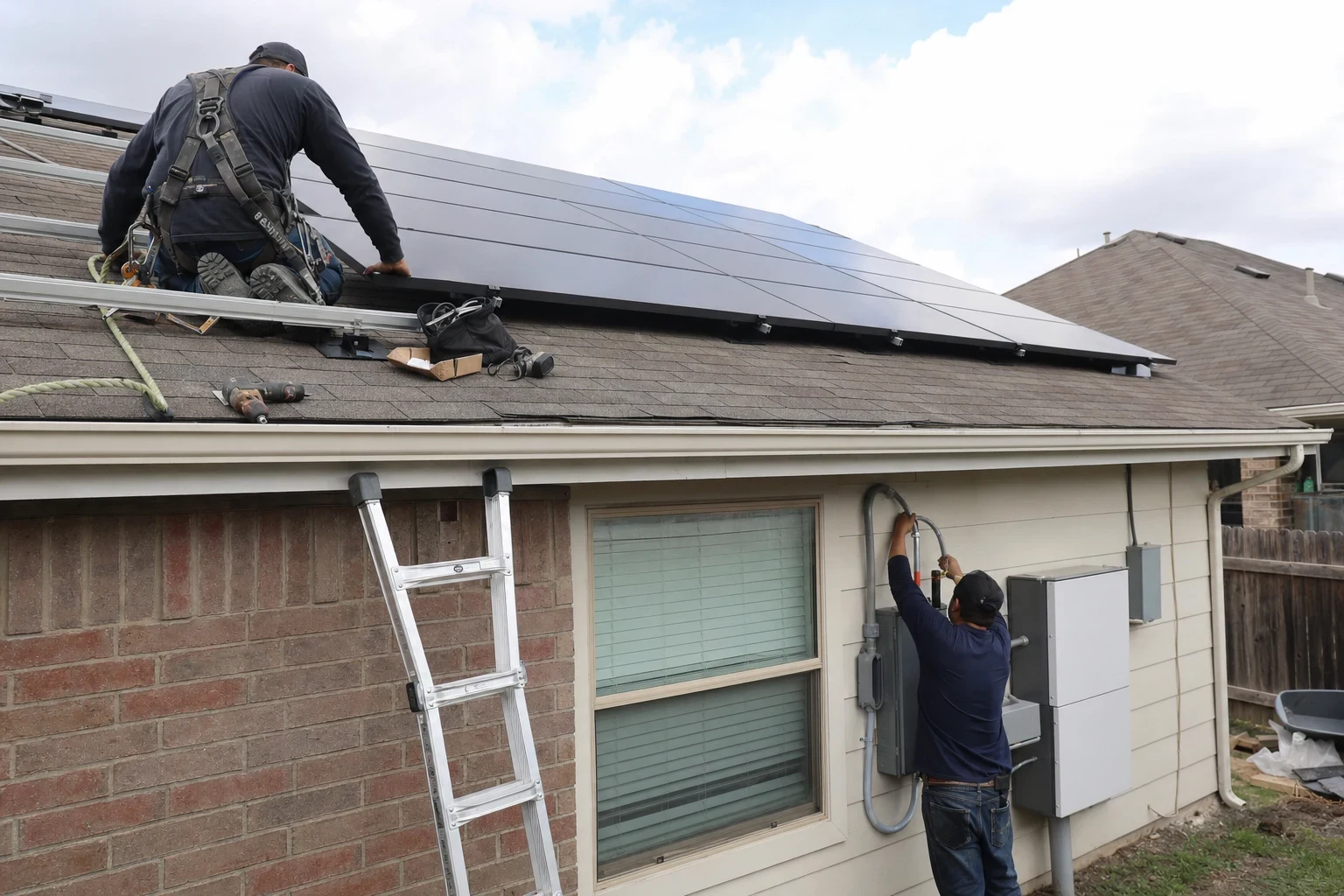
We handle solar panel installation and roof-mounted solar from the first roof measurement through utility interconnection. We also add battery storage to new or existing systems, track down faults through solar repair, and offer panel cleaning when dust and pollen start cutting into production. Each service page explains what the work involves and what moves the price.
Solar Panel Installation
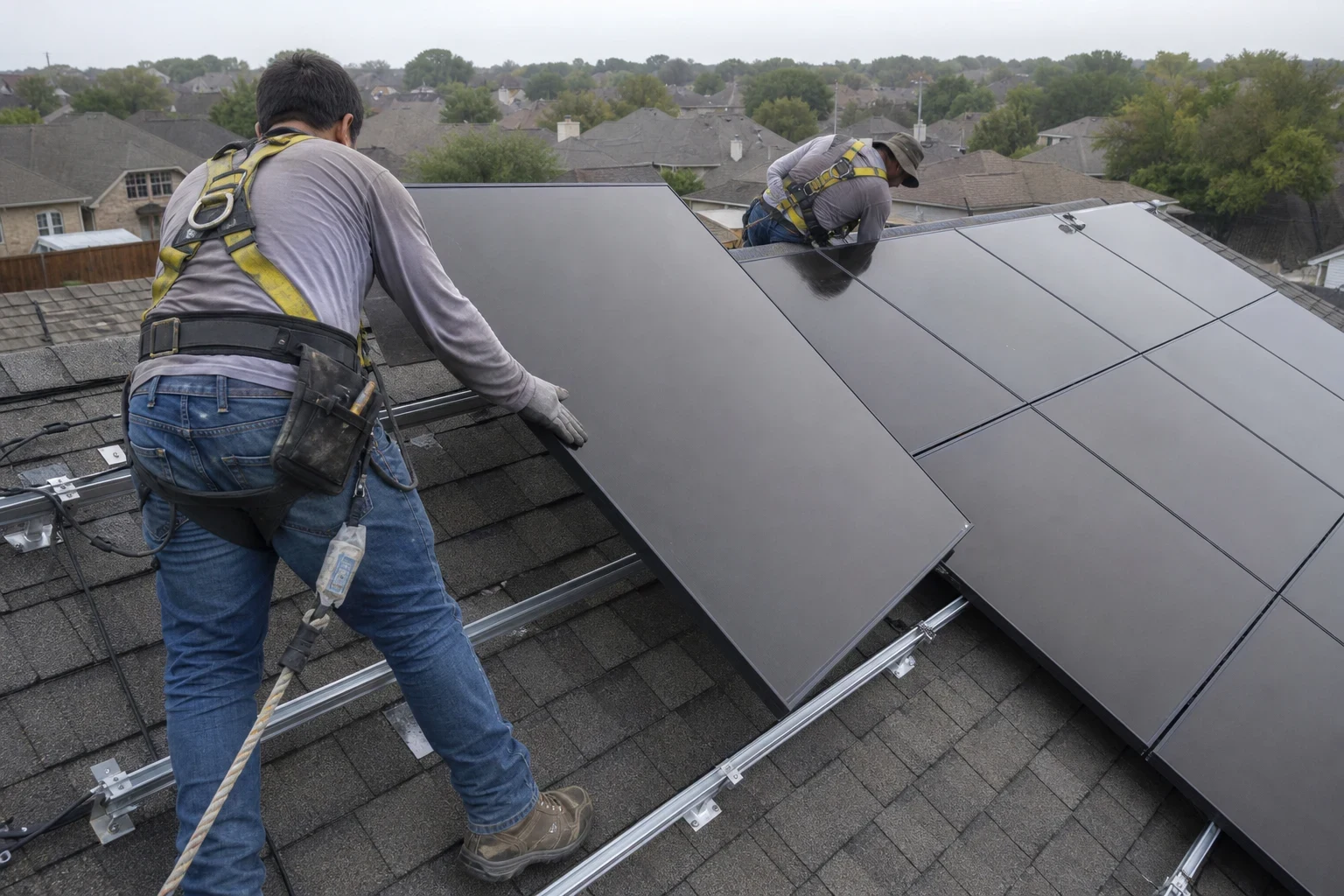
Full solar installs from roof survey and system design through permits, utility approval and a check-back visit once your panels are producing.
Battery Storage
Lithium iron phosphate battery systems paired with new or existing solar, wired to back up the circuits you choose and set up to store daytime production.
Solar Repair
We trace low output, inverter faults and wiring damage to the actual cause, fix it, then check your production data afterward to confirm the repair held.
Panel Cleaning
Soft-brush, pure-water cleaning that removes dust, pollen and droppings from your panels, with a quick visual check of the array while we are up there.
Roof-Mounted Solar
Panels on rails bolted into your rafters, every penetration flashed, with a check-back visit and care instructions once the system is running.
A Solar Company That Stays in Touch
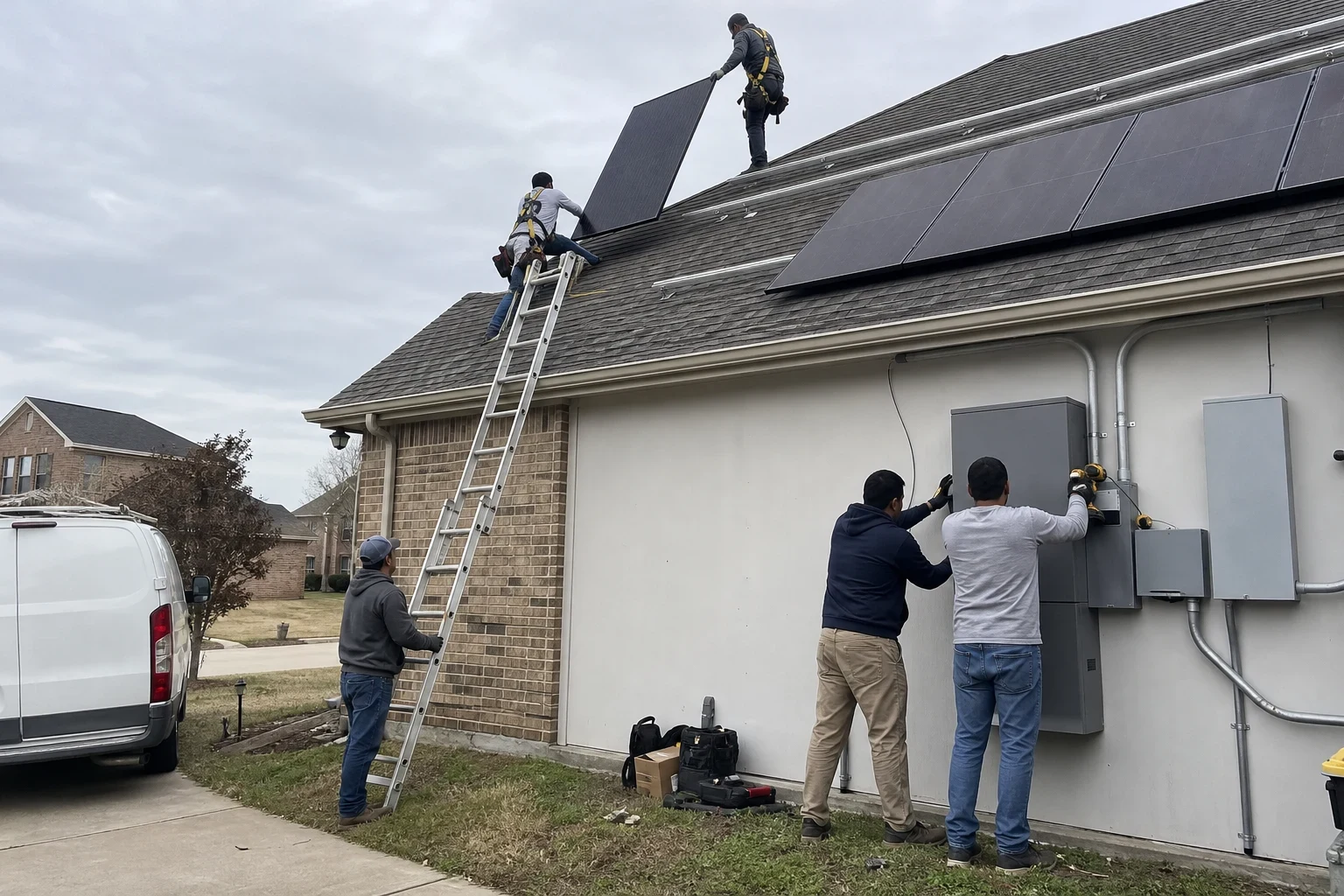
Solar Installation McKinney is a local solar contractor working on homes in McKinney and the towns around it. We started with a simple observation: most solar problems we get called about were small at first, a loose MC4 connector, a cracked conduit fitting, a monitoring app nobody checked. They grew because no one looked again after the install crew left.
So we built our work around the follow-up. We install carefully, document what we did with photos, and come back to confirm the system is producing what we said it would. Then we explain in plain terms how to read your monitoring, when panel cleaning is worth it, and which warning signs mean it is time for solar repair.
- In business
- In business 5 years
- Warranty
- 10-year workmanship warranty on solar
How a Solar Job Runs
Most of the waiting happens on paperwork, not on your roof. This is the order things happen in.
- 1
Phone call and bill review
We ask about your usage, your roof and your goals, and we look over your electric bills. That tells us whether solar makes sense before anyone climbs a ladder.
- 2
Site visit and design
We measure the roof, check rafter spacing and shingle condition, look for shade, and inspect your main panel. Then we lay out the array and send a written estimate.
- 3
Permits and utility approval
We draw up the plan set the city needs for a building permit and submit the request to connect to the utility that serves your home. Any form that needs your signature comes to you, and we answer the questions both offices send back.
- 4
Installation and inspection
On install day we set mounts and flashing, run rails, place panels and wire the inverter and disconnects. Once the city inspection passes and the utility approves, the system is switched on.
- 5
Check-back and care walkthrough
We return once the system has run a few weeks to compare real production to the design and go over care with you. You keep our number for anything that comes up later.
Why Homeowners Choose Us
A solar system runs for decades, so the day the inspector signs off is the middle of the job, not the end. Here is how we work.
We come back to check production
Once your system has run a few weeks, we review its production against the design estimate. If one string or panel is lagging, we find out why while it is still a small fix.
You learn how to care for it
We walk you through the monitoring app, the rapid shutdown switch and the breaker, and we leave written care notes. You will know what a normal day of production looks like and what a warning looks like.
Estimates you can read line by line
Panels, inverters, racking, electrical work, permits and labor are listed separately. You can see exactly what you are paying for and compare it fairly.
Mounts sealed against water
Every roof attachment gets flashing and sealant rated for the shingle type, and we photograph the mounts before panels cover them. You get those photos with your paperwork.
An honest repair-or-replace answer
When an older system underperforms, we test before we recommend anything. Often a failed connector or one tired inverter is the real problem, not the whole array.
What Moves the Price of Solar
Two homes on the same street can get very different quotes. The difference usually comes down to how much power you use, what your roof allows, and which equipment fits your goals. Here are the main factors we price.
We build each estimate from your bills, roof measurements and electrical panel, and you get it in writing with every line item shown. Call us to talk through your project and get your quote by phone.
- System size
- We size the array from your past twelve months of electric bills. More kilowatts means more panels, more racking and more labor.
- Roof layout and pitch
- A single large south- or west-facing plane is the simplest layout. Multiple small planes, steep pitches or vents in the way add rail, wiring runs and time on the roof.
- Inverter type
- String inverters cost less up front. Microinverters or power optimizers cost more but keep one shaded panel from dragging down the rest and report panel-level data.
- Battery storage
- Adding a battery changes the price more than any other option. Its capacity and whether it backs up the whole home or only selected circuits both matter.
- Electrical panel condition
- An older or full main service panel may need an upgrade or a supply-side connection before solar can tie in. We check it during the site visit so it is not a surprise later.
- Permits and interconnection
- City permit fees, inspection steps and utility paperwork are part of every job. We list them on the estimate instead of folding them into a vague total.
Where We Work
McKinney is our home base, and our crews travel to homes in Allen, Plano, Frisco, Fairview and Lucas, as well as Prosper, Celina, Melissa, Princeton and Parker, for new systems, battery work, repairs and cleanings. Every one of those cities runs its own permit office and inspection calendar, so we file with the one that covers your address.
- McKinney
- Fairview
- Frisco
- Allen
- Prosper
- Princeton
- Melissa
- Lucas
- Parker
- Plano
- Celina
If your town is not listed, call and tell us where your home is. We will let you know whether we can reach it for the work and the follow-up visit.
Questions We Hear Most
What will solar cost for my home?
The total turns on how many kilowatts you need, how your roof is laid out, the inverter type, whether a battery is part of the plan, and what shape your electrical panel is in. Because we price from your real bills and roof measurements, we will not guess at a number before seeing them. The written estimate then shows every part and fee on its own line.
Will solar panels make my roof leak?
Not when the mounts are installed correctly. Each attachment is lagged into a rafter and sealed with flashing made for the shingle type, so water sheds over the mount instead of into the hole. We photograph the mounts before the panels go on and share those photos with you.
How do panels hold up to hail?
Most residential panels use tempered glass tested against hail impacts, and they handle typical North Texas storms well. Very large hail can still crack glass. After a major storm, check your monitoring app for a sudden drop in production and call us so we can inspect the array.
Do I need a battery?
Not to go solar. A battery lets you store daytime production for evening use and keeps selected circuits running during a grid outage. Whether it pays off depends on your utility plan and how much backup matters to you, and we will go through both on the call.
How often should panels be cleaned?
Rain handles light dust on tilted panels. Pollen, construction dust and bird droppings can build up and cut output noticeably, especially through long dry spells. If your production drops and the panels look filmed over, a professional cleaning with soft brushes and purified water is the safe fix.
What happens after my system is turned on?
We come back once it has run a few weeks and compare real production against the design estimate. We also walk you through the monitoring app, the shutoff switches and basic care, and leave written notes so you know what normal looks like.
Do you offer a warranty?
Yes, we include a 10-year workmanship warranty on solar. That covers how we installed your system. The equipment itself, meaning the panels, inverters and any battery, comes with separate coverage from each manufacturer, and we go over which warranty handles what before you sign.
Get a Straight Answer on Solar for Your Home
Have your last year of electric bills handy and a rough idea of what you want the system to cover. We will go through the options in plain terms and schedule a site visit if solar fits.